About Me

Donation based craniosacral therapy drop in clinic for babies and adults

Tuesdays mornings 9.20-11.30pm (do come in by 9.10am to write your name down) at: Every Tuesdays except on School half-terms

Opens on the 2nd of September 2025

Hornsey Vale Community Centre  60 Mayfield Road N8 9LP.

The Clinic is non-appointment based, closed during school holidays and is for all – babies, children and adults. Private sessions are available all year round.

Arriving at the clinic around 9.10am is recommended to secure a time-slot for your session as at time could be very busy. The clinic is run on a first come, first served basis.

We will be asking to fill in a simple form for adults and for your baby/children. 

How to hold a baby while working with them in CST, plus questions workshop! 27.10.2025

Tips on how to hold a baby while working through CST workshop online on 27.10.25 and more in 2026

This will be a workshop of showing practical tips to work with babies when holding them, calming them down, before or during small adjustments, latching problems, sleeping problems and resistance to sleeping, mild torticollis tips, when they have reflux and colic and holding them and calming them, positions and more. Showing on a baby doll.

Questions on working with babies, what to do and not to do plus.

Zoom Link for the workshop will be given near the time and only if booked.

Recording link will also be given afterwards with 2 hours CPD.

Payment of £ 30.00 via bank transfer to

Bank transfer to Maria Esposito TSB  code 308472 account 24603860 

Craniosacral Therapy (CST) Transformational healing, of body, mind and soul

Craniosacral therapy

Featured by Craniosacral Therapy/Paediatric craniosacral therapy/Nutrition/NAET/ NLP Health Coach/Mindfulness meditation, posted in Blogcranio-sacral therapy

Craniosacral therapy is a subtle and profound healing form. See your life transmuting into a bliss, healing from inside out!

In a typical craniosacral session, you will usually lie fully-clothed on a treatment couch. The therapist will make contact by placing their hands usually lightly on your body and tuning in. The first thing you will probably notice is a sense of deep relaxation, which will generally last throughout the session. This release of tension often extends into everyday life.

Often traumas from childhood are stored in our body or even cells, and those unconscious traumas, can be triggered at any time in the life of the adults. Quite often with a body injury or illness. Craniosacral therapy allows the body system to feel safe enough to show the trauma, big or small, at the time that the person is ready to deal with, usually when they feel safe enough to share or deal with whatever emotion is attached to that trauma. With mindfulness meditation and heart meditation, the person has a tool to be able to connect with their heart and deal with whatever comes up in a loving space. My work is to connect to my heart and the person heart to reach a stillness where anything is possible, and any healing is allowed to happen in a loving experience. Craniosacral therapy, does not force any trauma out without the person being ready. That is the magical part of this wonderful therapy.

Sometimes the benefits are not immediately noticeable but become obvious on returning to a familiar environment. The work is often deeply moving and exhilarating.

The benefit can also be noticed after few days in some people. The experience is different from each baby, child or adult according to their own need of balance and adjustm

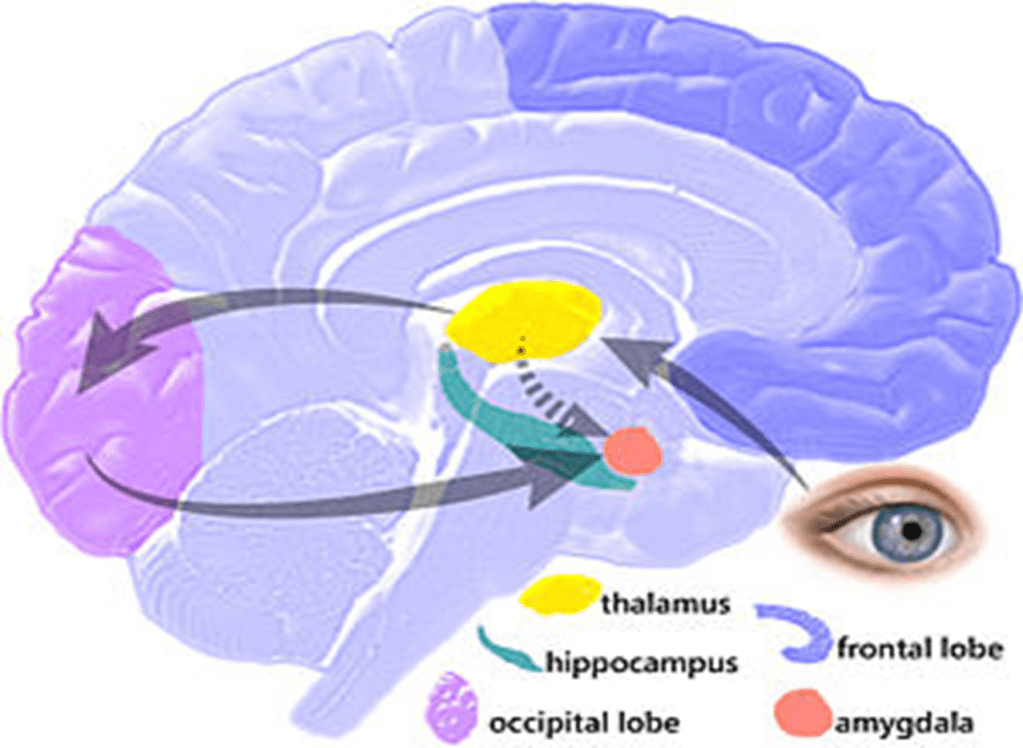
Function of the left and right Amygdala from birth

The importance of self-regulation, emotions and attachments since birth

  • The central nucleus of the amygdala has direct correlations to the hypothalamus and brainstem – areas directly related to fear and anxiety.
  • Many projection areas of the amygdala are critically involved in specific signs that are used to measure fear and anxiety.
  • There is a direct relationship between the activation of the amygdala and the level of anxiety the subject feels.
  • Feelings of anxiety start with a catalyst – an environmental stimulus that provokes stress. This can include various smells, sights, and internal feelings that result in anxiety.
  • Fear responses can include dizziness, faint, giving up, pleasing others, freeze, startle, high heart rate, etc. (stress cascade response). This can be felt through craniosacral treatment all over their system.
  • Moderate fear level causes a startle reflex, while a bigger fear does not. The amygdala is thought to be involved in enhancing the startle reflex in the moderate fear reaction (Walker).
  • Facial expression of fear or acknowledged fear is connected with the right amygdala. 
  • The right amygdala seems to be more connected and activated with the conditional fear, while the left is more connected with the non-conditional fears.
  • The amygdala in males, is bigger than the female one as the amygdala has got more androgen receptors and therefore testosterone stimulates the amygdala to grow more.
  • There is also difference in the left and right amygdala for both female and male.
  • The left full growth is about 1.5 to 2 years before the right full growth.
  • Right amygdala is connected to the face recognition. 
  • It is thought that the early left amygdala development, is due to giving infants the ability to detect danger (possible connection to primitive brain, the occipital brain). 
  • In childhood, the amygdala is found to react differently to same-sex versus opposite-sex individuals.
  • This reactivity decreases until a person enters adolescence, where it increases dramatically at puberty.
  • So, the amygdala is very important during the most difficult times in teenagers! If you have some now, brace yourself and blame it on the amygdala!
  • Difference in emotional stimulation in men and women have also been found.
  • A recollection of a horror film in women, would activate more the left amygdala, while same thing for men would activate more the right amygdala.
  • The right amygdala has been linked to taking action and to negative emotions. This is one of the reasons that men might fight when scared.
  • This is why men and women also respond differently to stressful stimuli, as the left amygdala allows for the recall of details, but it also results in more thought rather than action.
  • Amygdala can be affected by meditation, possibly resulting in more compassion and connection towards others, according to a study with Buddha Monks.
  • Left amygdala has been connected to anxiety in children.
  • Low activity of the gland in general though, results in more anxiety and depression.
  • The use of serotonin drugs increases the size of the amygdala (as we have mentioned above because of the receptors 5HT for serotonin).
  • Some studies also have connected autism to small left amygdala.

Function of the left and right Amygdala from birth

The importance of self-regulation, emotions and attachments since birth

  • The central nucleus of the amygdala has direct correlations to the hypothalamus and brainstem – areas directly related to fear and anxiety.
  • Many projection areas of the amygdala are critically involved in specific signs that are used to measure fear and anxiety.
  • There is a direct relationship between the activation of the amygdala and the level of anxiety the subject feels.
  • Feelings of anxiety start with a catalyst – an environmental stimulus that provokes stress. This can include various smells, sights, and internal feelings that result in anxiety.
  • Fear responses can include dizziness, faint, giving up, pleasing others, freeze, startle, high heart rate, etc. (stress cascade response). This can be felt through craniosacral treatment all over their system.
  • Moderate fear level causes a startle reflex, while a bigger fear does not. The amygdala is thought to be involved in enhancing the startle reflex in the moderate fear reaction (Walker).
  • Facial expression of fear or acknowledged fear is connected with the right amygdala. 
  • The right amygdala seems to be more connected and activated with the conditional fear, while the left is more connected with the non-conditional fears.
  • The amygdala in males, is bigger than the female one as the amygdala has got more androgen receptors and therefore testosterone stimulates the amygdala to grow more.
  • There is also difference in the left and right amygdala for both female and male.
  • The left full growth is about 1.5 to 2 years before the right full growth.
  • Right amygdala is connected to the face recognition. 
  • It is thought that the early left amygdala development, is due to giving infants the ability to detect danger (possible connection to primitive brain, the occipital brain). 
  • In childhood, the amygdala is found to react differently to same-sex versus opposite-sex individuals.
  • This reactivity decreases until a person enters adolescence, where it increases dramatically at puberty.
  • So, the amygdala is very important during the most difficult times in teenagers! If you have some now, brace yourself and blame it on the amygdala!
  • Difference in emotional stimulation in men and women have also been found.
  • A recollection of a horror film in women, would activate more the left amygdala, while same thing for men would activate more the right amygdala.
  • The right amygdala has been linked to taking action and to negative emotions. This is one of the reasons that men might fight when scared.
  • This is why men and women also respond differently to stressful stimuli, as the left amygdala allows for the recall of details, but it also results in more thought rather than action.
  • Amygdala can be affected by meditation, possibly resulting in more compassion and connection towards others, according to a study with Buddha Monks.
  • Left amygdala has been connected to anxiety in children.
  • Low activity of the gland in general though, results in more anxiety and depression.
  • The use of serotonin drugs increases the size of the amygdala (as we have mentioned above because of the receptors 5HT for serotonin).
  • Some studies also have connected autism to small left amygdala.
  • It seems that artistic or creative activity would increase the size and activity of the amygdala.
  • Amygdala also deals with positive emotions, (it could be because of more 5HT receptors in the right amygdala).
  • Amygdala size is also connected to the social interaction and network. The bigger the activity and size the more social the people were.
  • Emotional fear as we mentioned above is very much connected to the gland, as damage to both of them leads to having no fears at all, which can be dangerous for the person and people surrounding that person. 

The amygdala is an essential part of the connection and social activity and behaviour for later on in life. In babies, any birth trauma, in utero and post-birth can lead to possible unstable social behaviour from the start, they might either sleep too much and not connect or engage with the environment around them or scream their head off. Some babies will need more attention than others, and 1 to 3 or more, sessions of craniosacral therapy might help with balancing up their autonomic nervous system.

For adults it might take 10 or more sessions, but it is worth every single session, it will change their way of perceive life, by balancing the vagal nerve.

Written by Maria Esposito BSc (Hons), therapists, teacher and author.

Craniosacral Therapy (CST) Transformational healing, of body, mind and soul

Craniosacral Therapy (CST) Transformational healing, of body, mind and soul

Craniosacral therapy is a subtle and profound healing form. See your life transmuting into a bliss, healing from inside out!

In a typical craniosacral session, you will usually lie fully-clothed on a treatment couch. The therapist will make contact by placing their hands usually lightly on your body and tuning in. The first thing you will probably notice is a sense of deep relaxation, which will generally last throughout the session. This release of tension often extends into everyday life.

Often traumas from childhood are stored in our body or even cells, and those unconscious traumas, can be triggered at any time in the life of the adults. Quite often with a body injury or illness. Craniosacral therapy allows the body system to feel safe enough to show the trauma, big or small, at the time that the person is ready to deal with, usually when they feel safe enough to share or deal with whatever emotion is attached to that trauma. With mindfulness meditation and heart meditation, the person has a tool to be able to connect with their heart and deal with whatever comes up in a loving space. My work is to connect to my heart and the person heart to reach a stillness where anything is possible, and any healing is allowed to happen in a loving experience. Craniosacral therapy, does not force any trauma out without the person being ready. That is the magical part of this wonderful therapy.

Sometimes the benefits are not immediately noticeable but become obvious on returning to a familiar environment. The work is often deeply moving and exhilarating.

The benefit can also be noticed after few days in some people. The experience is different from each baby, child or adult according to their own need of balance and adjustments.

Craniosacral therapy is a subtle and profound healing form. See your life transmuting into a bliss, healing from inside out!

Craniosacral therapy is a subtle and profound healing form. See your life transmuting into a bliss, healing from inside out!

In a typical craniosacral session, you will usually lie fully-clothed on a treatment couch. The therapist will make contact by placing their hands usually lightly on your body and tuning in. The first thing you will probably notice is a sense of deep relaxation, which will generally last throughout the session. This release of tension often extends into everyday life.

Often traumas from childhood are stored in our body or even cells, and those unconscious traumas, can be triggered at any time in the life of the adults. Quite often with a body injury or illness. Craniosacral therapy allows the body system to feel safe enough to show the trauma, big or small, at the time that the person is ready to deal with, usually when they feel safe enough to share or deal with whatever emotion is attached to that trauma. With mindfulness meditation and heart meditation, the person has a tool to be able to connect with their heart and deal with whatever comes up in a loving space. My work is to connect to my heart and the person heart to reach a stillness where anything is possible, and any healing is allowed to happen in a loving experience. Craniosacral therapy, does not force any trauma out without the person being ready. That is the magical part of this wonderful therapy.

Sometimes the benefits are not immediately noticeable but become obvious on returning to a familiar environment. The work is often deeply moving and exhilarating.

Treating birth trauma with craniosacral therapy, workshop for craniosacral therapists. Next online workshop will be on Sunday 14th.09.2025.

his is a combination of theoretical, practical with each other. The workshop will run on a

Notes will be given after the workshop with the certificates of CPD

  • Theory on birth patterns some videos and slides will be shown
  • Practical tips for handling babies and mothers with each specific problem.
  • Practical on each other working with the womb and birth issues and possible mother issues. (if online, prepare your couch and this will be done from distance)
  • Discussions on the fears and doubts about working with babies and mothers.
  • Plenty of notes to go back to. 
  • Meditation to try when working with babies and mothers.
  • Discussion after the practical (distance) with each other about the experience, questions and answers regarding working with babies and mothers.
  • click here to read morehttp://www.nutritionhealth.net

Vagal nerve and craniosacral therapy, rebalancing (Copy)

The polyvagal nerve, is part of the nervous system and the nervous system is part of the brain that will give signal when things are ok and when they are not. In some cases, in adults with childhood trauma, can all of the sudden experience stress related episodes with no recollection of when and where that happen. For most people the talking therapy will be good when they know what the problem or issue are, and often they are resolved. But some stress response or trauma will not be reached just by the conscious mind, or it will take months or even years before you can reach it.

Often traumas from childhood are stored in our body or even cells, and those unconscious traumas, can be triggered at any time in the life of the adults. Quite often with a body injury or illness. Craniosacral therapy allows the body system to feel safe enough to show the trauma, big or small, at the time that the person is ready to deal with, usually when they feel safe enough to share or deal with whatever emotion is attached to that trauma. With mindfulness meditation and heart meditation, the person has a tool to be able to connect with their heart and deal with whatever comes up in a loving space. My work is to connect to my heart and the person heart to reach a stillness where anything is possible, and any healing is allowed to happen in a loving experience. Craniosacral therapy, does not force any trauma out without the person being ready. That is the magical part of this wonderful therapy.

Craniosacral therapy is the only one that will help the nervous system to feel calm, relaxed and safe enough to be able to reach that stress trigger and allow the person to deal with it in a more gentle and compassionate way.

Sometimes the trigger of stress is just that, too many things to deal with and no enough time to deal with them apart from night time, when all is quite and the body does nothing. This means that the stress mode or emotions and feeling can be address, even though the person wants to sleep, they do not manage to sleep well and hence is a catch 22. They feel tired during the day, irritated, get busy and drink coffee, teas, or even worse Bull, which is an equivalent of 4 coffees in a can.

Craniosacral therapy, allows the brain to calm down enough and allow the person to deal with whatever situation they are conflicting with or need to deal with during the day, rather than night time, allowing the person to start having more sleep and be more productive in a day time. For me craniosacral therapy is a bit of magical touch, where the person can enter a state of deep relaxion, without too much effort and getting in touch with their inner wisdom and higher self!

Vagal nerve and craniosacral therapy, rebalancing

The polyvagal nerve, is part of the nervous system and the nervous system is part of the brain that will give signal when things are ok and when they are not. In some cases, in adults with childhood trauma, can all of the sudden experience stress related episodes with no recollection of when and where that happen. For most people the talking therapy will be good when they know what the problem or issue are, and often they are resolved. But some stress response or trauma will not be reached just by the conscious mind, or it will take months or even years before you can reach it.

Often traumas from childhood are stored in our body or even cells, and those unconscious traumas, can be triggered at any time in the life of the adults. Quite often with a body injury or illness. Craniosacral therapy allows the body system to feel safe enough to show the trauma, big or small, at the time that the person is ready to deal with, usually when they feel safe enough to share or deal with whatever emotion is attached to that trauma. With mindfulness meditation and heart meditation, the person has a tool to be able to connect with their heart and deal with whatever comes up in a loving space. My work is to connect to my heart and the person heart to reach a stillness where anything is possible, and any healing is allowed to happen in a loving experience. Craniosacral therapy, does not force any trauma out without the person being ready. That is the magical part of this wonderful therapy.

Craniosacral therapy is the only one that will help the nervous system to feel calm, relaxed and safe enough to be able to reach that stress trigger and allow the person to deal with it in a more gentle and compassionate way.

Sometimes the trigger of stress is just that, too many things to deal with and no enough time to deal with them apart from night time, when all is quite and the body does nothing. This means that the stress mode or emotions and feeling can be address, even though the person wants to sleep, they do not manage to sleep well and hence is a catch 22. They feel tired during the day, irritated, get busy and drink coffee, teas, or even worse Bull, which is an equivalent of 4 coffees in a can.

Craniosacral therapy, allows the brain to calm down enough and allow the person to deal with whatever situation they are conflicting with or need to deal with during the day, rather than night time, allowing the person to start having more sleep and be more productive in a day time. For me craniosacral therapy is a bit of magical touch, where the person can enter a state of deep relaxion, without too much effort and getting in touch with their inner wisdom and higher self!