

The importance of self-regulation, emotions and attachments since birth
- The central nucleus of the amygdala has direct correlations to the hypothalamus and brainstem – areas directly related to fear and anxiety.
- Many projection areas of the amygdala are critically involved in specific signs that are used to measure fear and anxiety.
- There is a direct relationship between the activation of the amygdala and the level of anxiety the subject feels.
- Feelings of anxiety start with a catalyst – an environmental stimulus that provokes stress. This can include various smells, sights, and internal feelings that result in anxiety.
- Fear responses can include dizziness, faint, giving up, pleasing others, freeze, startle, high heart rate, etc. (stress cascade response). This can be felt through craniosacral treatment all over their system.
- Moderate fear level causes a startle reflex, while a bigger fear does not. The amygdala is thought to be involved in enhancing the startle reflex in the moderate fear reaction (Walker).
- Facial expression of fear or acknowledged fear is connected with the right amygdala.
- The right amygdala seems to be more connected and activated with the conditional fear, while the left is more connected with the non-conditional fears.
- The amygdala in males, is bigger than the female one as the amygdala has got more androgen receptors and therefore testosterone stimulates the amygdala to grow more.
- There is also difference in the left and right amygdala for both female and male.
- The left full growth is about 1.5 to 2 years before the right full growth.
- Right amygdala is connected to the face recognition.
- It is thought that the early left amygdala development, is due to giving infants the ability to detect danger (possible connection to primitive brain, the occipital brain).
- In childhood, the amygdala is found to react differently to same-sex versus opposite-sex individuals.
- This reactivity decreases until a person enters adolescence, where it increases dramatically at puberty.
- So, the amygdala is very important during the most difficult times in teenagers! If you have some now, brace yourself and blame it on the amygdala!
- Difference in emotional stimulation in men and women have also been found.
- A recollection of a horror film in women, would activate more the left amygdala, while same thing for men would activate more the right amygdala.
- The right amygdala has been linked to taking action and to negative emotions. This is one of the reasons that men might fight when scared.
- This is why men and women also respond differently to stressful stimuli, as the left amygdala allows for the recall of details, but it also results in more thought rather than action.
- Amygdala can be affected by meditation, possibly resulting in more compassion and connection towards others, according to a study with Buddha Monks.
- Left amygdala has been connected to anxiety in children.
- Low activity of the gland in general though, results in more anxiety and depression.
- The use of serotonin drugs increases the size of the amygdala (as we have mentioned above because of the receptors 5HT for serotonin).
- Some studies also have connected autism to small left amygdala.
- It seems that artistic or creative activity would increase the size and activity of the amygdala.
- Amygdala also deals with positive emotions, (it could be because of more 5HT receptors in the right amygdala).
- Amygdala size is also connected to the social interaction and network. The bigger the activity and size the more social the people were.
- Emotional fear as we mentioned above is very much connected to the gland, as damage to both of them leads to having no fears at all, which can be dangerous for the person and people surrounding that person.
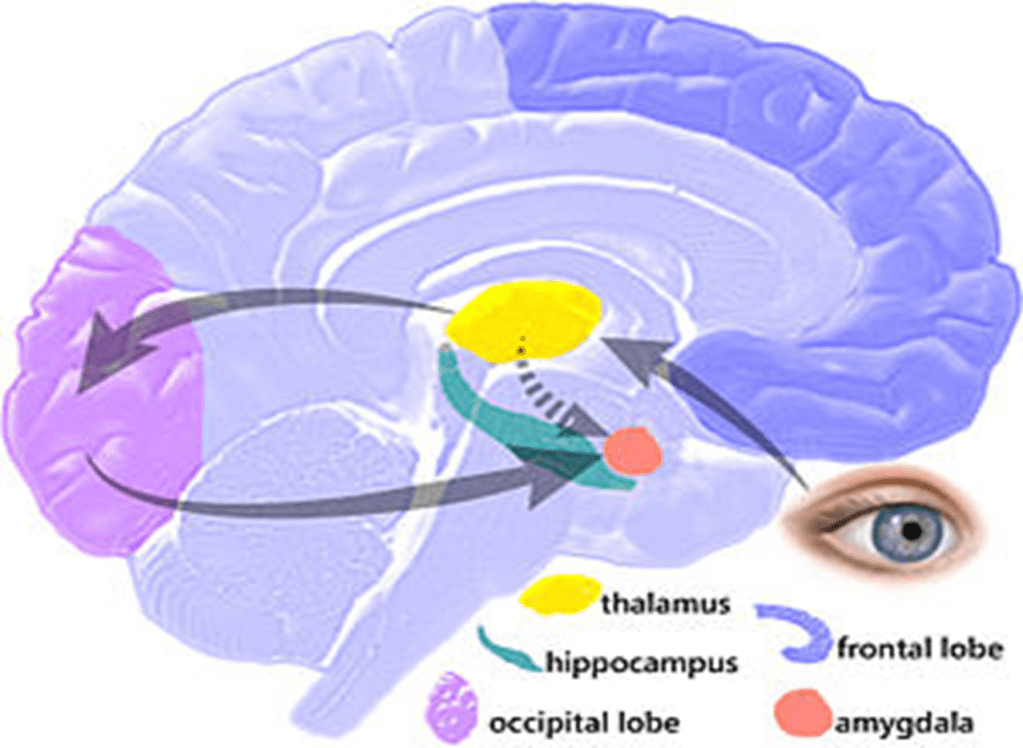
The amygdala is an essential part of the connection and social activity and behaviour for later on in life. In babies, any birth trauma, in utero and post-birth can lead to possible unstable social behaviour from the start, they might either sleep too much and not connect or engage with the environment around them or scream their head off. Some babies will need more attention than others, and 1 to 3 or more, sessions of craniosacral therapy might help with balancing up their autonomic nervous system.
For adults it might take 10 or more sessions, but it is worth every single session, it will change their way of perceive life, by balancing the vagal nerve.
Written by Maria Esposito BSc (Hons), therapists, teacher and author.
 Craniosacral Healing /Nutrition NAET/Mindfulness living/ NlP health coach /mind body and soul