Why You Need Vitamin B12: Functions and Benefits Explained

As a nutritionist you get always surprised when something that you recommended to one of your clients did exactly what your client told you. Sometimes I think they might be a placebo effect when the improvement is so quick, but I must admit that it is possible.

One of my clients, a while back, said that vitamin B12 sublingual made a huge difference from the moment they took it. Now I thought, well the research mention that it might take few weeks to see a big improvement with sublingual or even with B12 injections, which by the way, sublingual and injections seems to have the same quick effect, so I now might choose the sublingual instead.

I had a series of little things recently, which started from my digestions of food, not as noticeable that I thought of a problem, as everything seems to be ok. I did have a bit of stress due to my dog passed away this year, but I did not think that stress and sadness would turn into a healthy issue, even though I should know better. As usual as therapist we think we are invincible and always ok.

Anyway, I did a good liver detox, digestions make over, food and diet a bit healthier than before (pretty healthy, already), a bit more soups and stew, with plenty of vegetables, nutritious proteins and good fats, and plenty of liver detox support supplements. That made my digestions and liver very, very happy. Now due to the liver and digestions problems, my immune system went down, with more viral infections that I usually have.

The last one is the one that is going around, the sore throat and flu. I manage it again with lots of vitamin C and other immune support. But still could not shift it, even with steam and lots of throat support and gargles with salt and water, and more, it seems my body immunity did not fight back quickly enough.

At some point I was much better, but still at night I would have this irritate cough and a sensation that a frog was stuck in my throat, I decide to go and buy some oregano to support my immune system with the vitamin C and a multi vitamin support. I could not find the oregano but for some nutritional instinct I decided to buy a sublingual Vitamin B12. I took 2 sachets of it of a total of about 500 microgram and within less than 10 minutes my irritate frog went completely, to my amazement, my mucus was loose and little. I thought was only my imagination, but did not have any cough at night and woke up still ok. I feel myself again. Now ideally would want to check my B12, but I am not vegetarian and I thought that might be normal. Eventually I will but could be that is going to be private, as the NHS right now is a bit annoying for appointments.

I looked more into the B12, and in reality, the fact that I had a stomach issue, due to low stomach acid, might have stopped the intrinsic factor and the R factor to transport my B12 into the cells.

Now I will explain a bit more about the absorption, and function of the B12 in more details, for everyone to understand the reason why everyone, from vegan to meat eaters can be low in B12, even though B12 is stored for years, if it is not transported into the cells, it is like you have none.

B12, unlike any other water B vitamins that are excreted every few hours from your body, is stored in the liver, with vitamin D, E and A.

Sources of vitamin B12 are only from animal products, any vegetarian source is by contact with animal or cross contamination or fortified vegetarian food, included cereals. Now the source of fortified food depends on the quality and the form of the B12.

B12 has a corrin nucleus and is part of the groups called corrinoids. This is a macrocyclic ring made of four reduced pyrrole rings linked together, this will carry an atom of cobalt, hence quite often you will see the name of the B12 as cyanocobalamin, hydrocobalamin, and Methylcobalamin and more. The methylcobalamin are the active form as coenzymes for many functions in the body.

Bioavailability of B12 can be impaired by vitamin C, so if you take B12 with a high or low dosage of vitamin C together at the same time or up to 1 hour after meal, such as 500mg, you stop from the B12 to work and be absorbed.

Digestion, absorption, transport and storage of vitamin B12:

Once the B12 is ingested from food, it needs to be released from the enzyme pepsin in the stomach (the stomach acid needs to be working well for the pepsin to be secreted, low stomach acid, will impair the secretion of pepsin and hence, B12 is not going to be released from the food, even if you are a meat eaters or eggs eater).

Also with stress, there is no signal to the stomach to release and activate pepsin to digest the proteins. The vagal nerve, is involved in the digestion process, too much into stress mode or sympathetic mode, will stop your full and healthy digestion, hence my stress or sadness caused by the loss of a dog, who was very dear to me, caused my stress, which caused my low stomach acid, which caused my B12 malfunction, which caused my immunity to go down, and so forth. Connecting the dots……

Once B12 is released from the food ingested, it needs two proteins for working. One is the intrinsic factor (IF) and the other is the R proteins. The IF is again made by the gastric cells (made again with a good and healthy stomach acid). IF is made and released by the stomach during a healthy digestion and works in the small intestine. The R proteins are everywhere in the body fluids, and have a high affinity for cobalamin. R will pick up the free cobalamin and transport it to the duodenum, first part of the small intestine, where the pancreatic juices will release the B12 again, unless you have a pancreatic insufficiency, (low enzyme activity) and again the B12 will not be released into the small intestine for transport into the blood stream. Again, if something goes wrong no B12.

In the proximal small intestine, the IF will pick up the freed B12 and transport it to the ileum, where receptors for B12 will wait for it to be transported into the blood stream. IF can transport B12 through the entire ileum and receptors are everywhere in the small intestine.

It seems that calcium ions is an essential mineral for the absorption of B12 into the blood stream.

From normal ingestion of food with B12, the process of absorption might take 3 to 4 hours before is in the blood stream.

As I mentioned before, B12 is the only one that can be stored in the liver for a long time and even years, and it is also found in small amount in kidneys, spleen, bone, heart and brain.

Now if children are vegan from weaning, and they are not given extra B12 supplementation from early age, there is a possibility that the child will be low in B12, which possible serious issues with their growth.

Some of the Function of B12:

  • Co-enzyme for the conversion of homocysteine into methionine.
  • Essential for the maintenance of the protective sheath surrounding nerves, hence, essential for the good function of the nervous system.
  • Has a key role for the making of a healthy red blood cell, hence essential for circulation and healthy blood.
  • Is a co-enzyme for one of the steps in making the ATP, the energy fuel for your cells, in the Kreb cycle, the energy nuclear power, in the mitochondria (where fuel for your body is formed, the CoA mutase).
  • It is part of the making of the serotonin in your body, the feeling good neurotransmitter, hence important for the health of the brain and mood.
  • Essential vitamin for making and repairing of DNA. This is essential for your life, really. The methylation part is an essential step for the DNA building block and the repair of damaged DNA. Without a sufficient B12, the DNA building and repair will be severely disrupted.
  • Supports also the normal function of the immune system. This is done by promoting white blood cells maturation and formation, as well as synthesis of division and replication of the DNA for the immune system.
  • Essential during pregnancy to prevent birth defect, with folate, this promotes cells division and DNA formation of the baby.
  • Essential for the health of the bones, through the synthesis of taurine, an amino acid essential for bone formation. There is also a positive correlation with good amount of B12 function and bone density.
  •  B12 for the eyes, is essential for the myelin sheath of the eyes, reduces dry eyes and reduction of oxidative stress, as well as inflammation.

Tests for B12 deficiency due to IF deficiency is a full blood count, which will measure serum B12 and some active B12.

An anti-intrinsic factor antibody test can be suggested for pernicious anaemia (autoimmune disease) or megaloblastic anaemia (big red blood cell).

Other tests are also recommended with folate as well.

As you have seen from the B12 ingestion, absorption, transportation and life of the B12, this is not just another B vitamin, is an essential vitamin for your health and life.

If you are vegan or you have children that are also vegan, do consider for life to have B12 sublingual supplementation, to make sure that your children will grow well without health issues, and you, yourself, is healthy.

Even as a meat eaters, if you have low stomach acid, or you are taking medication to reduce your stomach acid, if you had a gastric bypass, or you have any issues with digesting your food, pancreatic issues, bile issue, or constant stress, cannot sleep due to stress, have or had a bereavement, moved houses, or changed your lifestyle or you are the last person that you think about, due to overwhelming responsibility, than think about testing for B12 or even take for a while a sublingual B12 with folate if possible.

If you are pregnant and vegan, do take the vitamin, sublingual, as you have seen the long process and possible problems that the normal digestive journey of the B12 is, and possibly in a normal tablet form, will not reach the blood stream due to any of the digestive system problems.

Mindfulness meditation day for therapists

Some of the benefits of mindfulness documented in research, with the Heart-Math meditation and healing and cleansing meditation are that you are more present in your body and life, as well as more relaxed, in life decisions and more.

This is a day though for therapists, and hence we will do more than being present and relax, we get to a place of stillness, centering at out heart for more peace and calmness, as well as cleansing your cup of dirty water, and replenish it with clean full nourishing water for yourself and others.

What do I mean with that?

As therapists we do hold to some things or another, even if we try not to, and sometimes the residue of other people issues, might still linger within you, so have a day all for yourself, to be present, grounded and filled with more light to give!

The principles of mindfulness meditation are the following for the day, and the Heart-Math meditation from the heart will be included during the day, as well as grounding meditations and clearing meditations:

The day will follow the following principles:

Non-Judgment: impartial witnessing, observing your evaluations and categorizations. Noticing the automatic habit of labelling our experience as good, bad or neutral. Habit of judging locks us into an automatic reaction without being aware of them, where they do not have any objective basis. Once we are aware of out judging, then we can choose actions and behaviours more consciously, rather than automatically reacting to the situations in our environment. This principle is useful as we start to engage in a new mindfulness practice that our mind may judge as boring or a waste of time.

2) Patience: allowing things to unfold in their time, bringing patience to ourselves and others.  This is an understanding that sometimes things must unfold in their own time. This principle reminds us to be patient with ourselves as our mind is stretched in new ways. Patience is a helpful quality to invoke when the mind is agitated. To be patient, is to be open to each moment as it unfolds knowing that like the butterfly, that some things can only unfold in their own time. So, when starting out your mindfulness practice or anything else please stick through whatever takes place trusting that some things will make more sense after you have practiced them for a while.

3) Beginner’s Mind: Willing to see things as if for the first time.  We let our beliefs about a situation prevent us from seeing things as they really are. No moment is the same as any other. Beginner’s mind allows us to be receptive to new possibilities and prevents us from getting stuck in our mind, which often thinks it knows more than it actually does. Try to cultivate your own beginner’s mind as an experiment. The next time you see someone familiar, notice if you are seeing the person with fresh eyes or through the lens of your beliefs about that person. When you are out walking, see if you are noticing things, you might have overlooked before. Developing beginner’s mind opens you to possibilities in life you may be missing out on, because you are viewing everything through the lens shaped by past experiences, that is not aware of what else there is to learn and explore.

4) Trust: Developing trust in your feelings and yourself is an integral part of the mindfulness practice. The act of trusting yourself and your basic wisdom, is an important aspect of the mindfulness training.  If you are feeling strongly about something, it is important to attend to that, rather than ignore it because an outside authority is telling you to do so. Mindfulness is an objective process of inquiry and accepting what people of ‘authority’ tell you without questioning the validity of it for yourself is against the basic premise of mindfulness. It is important to stay open and learn from other sources but ultimately you have to live your life and make your choices that feel right to you. It is almost easier to trust external authorities to tell us how to live our lives. Mindfulness involves practicing trusting your own feelings and that doesn’t mean you react based upon all your feelings but that you explore any feelings that show up fully to see what they are telling you about a situation and then you trust yourself to come up with the right action.

5) Non-striving: non-goal oriented, remaining unattached to outcome or achievement. Even though everyone undertaking mindfulness practice has some goals intentions while they are taking their training, at the time of mindfulness practice itself, simply do the practice without any expectations. When you set expectations, such as feeling more relaxed, you are introducing conditions that don’t allow you to be fully present with what is, because you are trying to change the present to be something else. If you are trying to change the present then you are not being with what is, which is what the mindfulness training is. Remember to allow anything and everything that you experience from moment to moment to be there, because it already is. If you are tensed, just pay attention to the tension. If you are criticizing yourself, just observe the activity of the judging mind. Non-striving may be the most difficult of all the principles because in our culture we are taught to be goal-oriented and to be constantly doing something in order to reach our goals. In mindfulness you will reach your goals by not trying to change the present but by being present to whatever arises, and in that way, you will find that the goals are ultimately reached. This is perhaps something you will need to experience for yourself to really understand.

6) Acceptance: open to seeing and acknowledging things as they are. It does not mean approval or resignation. Acceptance is the willingness to see things as they really are. Acceptance does not mean that you have to be satisfied with the way things are or that you don’t do anything to change what you don’t like. When you have the ability to see things as they are you free up energy to take the appropriate actions, instead of working with a mind that is clouded by denial, prejudices, fears, and self-judgments.

7. Letting go: non-attachment and the ability to put aside the tendency to elevate some aspects of our experience and to reject others. Letting go is a way of letting things be, of accepting things as they are. When you observe your mind grasping or pushing away, you can remind yourself to let go of the impulse to grasp or push away and see what happens.

8. Gratitude: being thankful for the little things in life, can be very rewarding. Not taking our body for granted is also very rewarding for ourselves. Being thankful for what works in our body and mind is rewarding. Give thanks to our own body, inside and outside, e.g., gives thanks to our legs, our heart, our liver, our spleen, etc. Being thankful for the people who we have in our lives, that supports us, being thankful for our food, the earth that supply our food, and more.

9. Generosity: give to others, your time, or things that they need. Give attention to others, not for a reward but for the only reason that you would like to help others, that you would like to give to others, to make them feel better.

Contact Maria Esposito BSc (Hons) on esposito_m@yahoo.co.uk or call her on 07956662954

Reduces anxiety and panic attack are two of the many benefits:

● Stress reduction

● Clarity and focus

● Greater resilience

● Enhanced creativity

● Improved relationships

● Improved concentration

● Rapport and communication

● Improved health and wellbeing

● Greater confidence and self-esteem

● Ability to have better quality sleep

● Reduced anxiety and depression

● Improved work-life balance

● Greater work satisfaction

● Memory enhancement

● Intuitive ability

● Pain reduction

Resilience of the heart – productivity and creativity – emotional
intelligence – stress reduction and wellbeing.

Online workshop for therapists is £ 80 pounds to be paid via bank transfer on booking, your place is booked when paid.

Bank transfer to Maria Esposito TSB  code 308472 account 24603860 

Craniosacral therapy healing sessions

Craniosacral therapy

Craniosacral therapy is a subtle and profound healing form. See your life transmuting into a bliss, healing from inside out!

In a typical craniosacral session, you will usually lie fully-clothed on a treatment couch. The therapist will make contact by placing their hands usually lightly on your body and tuning in. The first thing you will probably notice is a sense of deep relaxation, which will generally last throughout the session. This release of tension often extends into everyday life.

Often traumas from childhood are stored in our body or even cells, and those unconscious traumas, can be triggered at any time in the life of the adults. Quite often with a body injury or illness. Craniosacral therapy allows the body system to feel safe enough to show the trauma, big or small, at the time that the person is ready to deal with, usually when they feel safe enough to share or deal with whatever emotion is attached to that trauma. With mindfulness meditation and heart meditation, the person has a tool to be able to connect with their heart and deal with whatever comes up in a loving space. My work is to connect to my heart and the person heart to reach a stillness where anything is possible, and any healing is allowed to happen in a loving experience. Craniosacral therapy, does not force any trauma out without the person being ready. That is the magical part of this wonderful therapy.

Sometimes the benefits are not immediately noticeable but become obvious on returning to a familiar environment. The work is often deeply moving and exhilarating.

The benefit can also be noticed after few days in some people. The experience is different from each baby, child or adult according to their own need of balance and adjustments.

Quite often the body will start unwinding, this is the fascial unwinding, which often happens in people with high stress, old and new chronic injuries to free the body, and in babies and children.

Our body system can get tight and rigid due to tension from the head to the toe, and often it leads to chronic pain, sleepless nights, and vagal nerve being trapped and hard to function well, leading to possible palpitation, anxiety and much more. Below is a sample of fascial unwinding.

Below are some of the issues that I have seen with fascial unwinding and craniosacral therapy with adults:

  • Digestive system and IBS problems, including bloating
  • Chronic pain from past injuries
  • Chronic pelvic area and back pain
  • Whiplash, old and new
  • Headaches and Migraines
  • Anxiety
  • Post-traumatic Stress disorder
  • Post operations and injuries
  • Post-partum
  • Pregnancy physical and emotional issues
  • and much more

I use CST by itself or with Nutritional advice and NAET treatments to integrate the entire body mind system at a deeper level. I notice that the body respond much more to the NAET treatments and the person feels more complete and healthier in body and mind, each time by releasing old patterns and old issue stored in the body.

http://www.nutritionhealth.net

The Knights of St. Johns order and healing connections with more

When you work with mind, body and mind, and soul, you come across humans who are meant to be healers, protectors and more. In order for them to go up in frequency, the human body needs to go through a certain healing and process, to be able to work higher. There is a cleansing of past issues in life, and often you need to go a cleansing and forgiveness time, for yourself and others, letting go of anger, and fear and more deep emotions that are keeping you stuck and in pain. When you work with some of the most gifted and spiritual people, I feel that very honoured, as I am supporting now their journey. A journey that I have gone through for the past 16 years, and maybe longer. The first part is quite hard, but the more you heal, the more you let go of the hurt, the pain, the anger and whatever you need to let go, the more clearly you see, the more peace and love gets into your cells, and more healing and Light you can see or feel or sense.

I came across the St Johns Knights order about 10 years ago in Malta, understanding a bit of their establishment, and what they did. There are various theory of the and some facts in various sources on the internet about where it started, it seems a Merchant of Amalfi was the originator, who wanted to protect the merchants but also heal the merchants at the same time. The order went from Amalfi to Jerusalem, where it started, and then to Greece, specifically to Rhodes and Cyprus and than established in Malta. The Order of knights of St. Johns, in Jerusalem, they are called the Knights Hospitaller. They would treat any humans, no matter their religion or creed.

I would add the spiritual part of the Knight now, which it feels like they are pretty much connected to the masculine healing of humans (female, male and all gender). The feeling that I had with working spiritually with them, it was about protection, flexibility, honour, truth, integrity, peace, and compassion with kindness. The heart needs to be of a higher frequency, of a higher frequency.

Spiritually, I felt that they were also connected to the Great White Light Brotherhood, which are White Light of God that helps humanity in achieving their higher frequency, and healing, protecting and helping humanity achieve their greatest frequency, you can read more about them in the spiritual blogs.

I felt that Both the White Light Brotherhood and the Knights of St. Johns, have been working together for at least a 1000 years and more. And who ever enters their order, will have ascended into their order in some way or another and will eventually find them both physically and spiritually.

It is funny that according to my DNA, I am almost half Greek, from possible Rhodes, my ancestors come from maybe merchants and landed in and around the area where my grand-parents grew up.

I feel honoured and curious about life and what is more than life. Right now, we are all been drawn to raise our voice, raise our frequency and connect to our higher self, in order to heal ourselves, heal our children and eventually heal our world!

Increasing breastmilk suggestions

Breastmilk as we all know is the best for the baby, and if you cannot breastfeed you do the next best thing and supply them what is possible, and that is amazing now days.

If you have problems with your baby latching though, breastfeeding can be quite painful or upsetting, and most mum can give up because of that.

If you have already consulted a breastfeeding specialist and nothing as changed, and your baby does not have any tie restrictions, then seeing a craniosacral therapist can make a huge difference in the tightness of the mouth and the entire fascia.

Your baby’s birth and your labour, might have been normal and vaginal, and still during gestation, your baby might have been stuck in one position on your bones or in the canal before birth for many hours. That might cause some contraction of the fascia, that might stop your baby stretching enough and relax enough, with the consequences of colics, reflux, constant crying, sleeping little, and breastfeeding problems.

If your baby had to have a C-section and or forceps and or ventouse, then the above restrictions are probably there. These restrictions and unbalances will create a problem with the palate, the suckling reflex and the vagal reflex, leading to poor latching, and hence less milk supply, due to poor suckling reflex.

Now even with a big supply from the mother, the baby can have a poor suckling reflex, which is essential for later on for eating and swallowing food, as well as speech.

The palate might be too high and narrow, or the mouth too tight, as well as the tongue not moving in all directions to stimulate their digestive system and opening of the digestive system valves.

click here for things to do to increase the milk supply, and if nothing helps, do see a craniosacral therapist for a gentle but powerful reset of your baby fascia. I would also recommend that the mother has a session or two, with the baby. It is very much worth every penny.

Craniosacral therapy for babies and mothers trauma, can have a massive positive effect on both mother and baby within 2 to 3 sessions. A bit more if the trauma was a bit more severe.

Calcium during pregnancy and breastfeeding

During pregnancy, calcium is an important minerals for mothers and babies, and the amount required goes up quite a bit, and without uploading the intake, the mother is the one that will suffer from the consequences, and if really low, the baby will too. For type of dietary intake and preference the amount is 1200 mg a day. Here is the list of how you can get it. Download it on your phone in pdf so that you have it with you at all time:

click here to download pdf file

If you need more information about nutrition in pregnancy and craniosacral therapy in pregnancy, contact me on my phone or email me click here

For adults who are still unsure of craniosacral therapy does.

Vagal nerve balancing with craniosacral therapy! North London clinics, N15 6HA and Life By Margot
The polyvagal nerve is part of the nervous system, and the nervous system is part of the brain that will give signal when things are ok and when they are not. In some cases, adults with childhood trauma can all of the sudden experience stress related episodes with no recollection of when and where that happens. For most people the talking therapy will be good when they know what the problem or issue are, and often they are resolved. But some stress response or trauma will not be reached just by the conscious mind, or it will take months or even years before you can reach it.
Often traumas from childhood are stored in our body or even cells, and those unconscious traumas can be triggered at any time in the life of the adults. Quite often with a body injury or illness. Craniosacral therapy allows the body system to feel safe enough to show the trauma, big or small, at the time that the person is ready to deal with, usually when they feel safe enough to share or deal with whatever emotion is attached to that trauma. With mindfulness meditation and heart meditation, the person has a tool to be able to connect with their heart and deal with whatever comes up in a loving space. My work is to connect to my heart and the person heart to reach a stillness where anything is possible, and any healing is allowed to happen in a loving experience. Craniosacral therapy does not force any trauma out without the person being ready. That is the magical part of this wonderful therapy.

====

I have also observed people’s lives changing in better, after few sessions of CST. Things such meeting the right person for them, and getting married, or travelling around the world, for a break, or changing a job to a better career, and much more healing! I have seen amazing healing and experience amazing transformation and transmutation of lives, from Heaven and Earth connections of any type of religion or atheism, All in one and one in All healing power together for the greatest good. In my clinics there are only humans and humanity healing!

Healing of the mind, body and soul!

How to hold a baby while working with them, plus questions workshop!

Tips on how to hold a baby while working through CST workshop online click here to read more

This will be a workshop of showing practical tips to work with babies when holding them, calming them down, before or during small adjustments, latching problems, sleeping problems and resistance to sleeping, mild torticollis tips, when they have reflux and colic and holding them and calming them, positions and more. Showing on a baby doll.

Questions on working with babies, what to do and not to do plus.

Zoom Link for the workshop will be given near the time and only if booked.

Recording link will also be given afterwards with 1 hour and half CPD.

Payment of £ 30.00

http://www.nutritionhealth.net

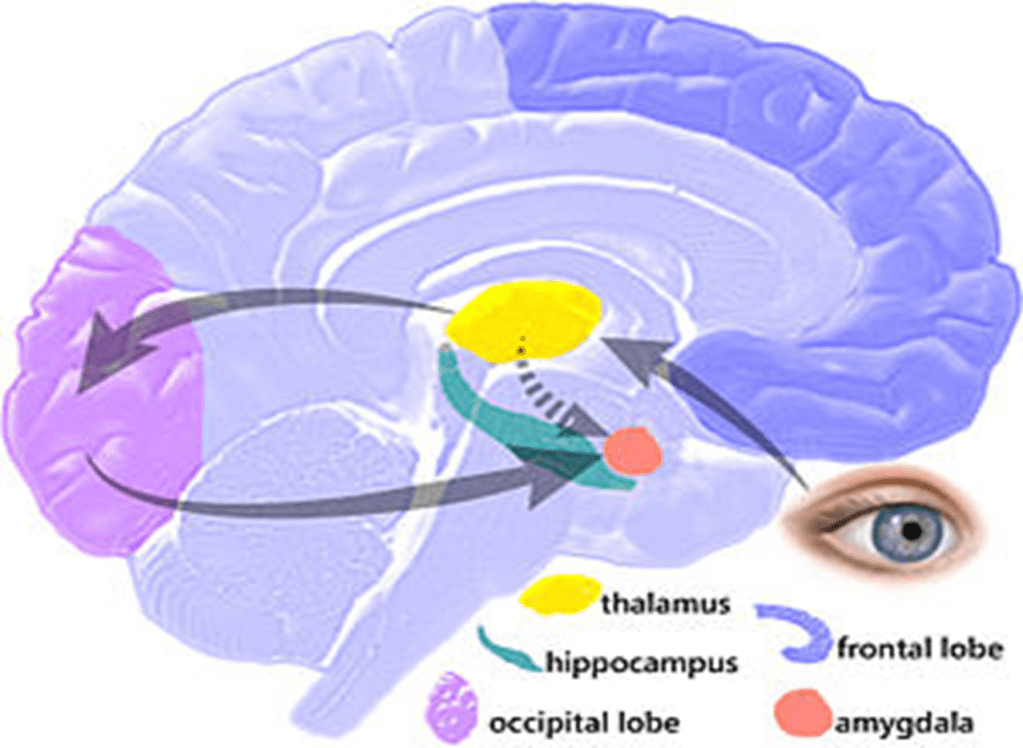
Function of the left and right Amygdala from birth

The importance of self-regulation, emotions and attachments since birth

  • The central nucleus of the amygdala has direct correlations to the hypothalamus and brainstem – areas directly related to fear and anxiety.
  • Many projection areas of the amygdala are critically involved in specific signs that are used to measure fear and anxiety.
  • There is a direct relationship between the activation of the amygdala and the level of anxiety the subject feels.
  • Feelings of anxiety start with a catalyst – an environmental stimulus that provokes stress. This can include various smells, sights, and internal feelings that result in anxiety.
  • Fear responses can include dizziness, faint, giving up, pleasing others, freeze, startle, high heart rate, etc. (stress cascade response). This can be felt through craniosacral treatment all over their system.
  • Moderate fear level causes a startle reflex, while a bigger fear does not. The amygdala is thought to be involved in enhancing the startle reflex in the moderate fear reaction (Walker).
  • Facial expression of fear or acknowledged fear is connected with the right amygdala. 
  • The right amygdala seems to be more connected and activated with the conditional fear, while the left is more connected with the non-conditional fears.
  • The amygdala in males, is bigger than the female one as the amygdala has got more androgen receptors and therefore testosterone stimulates the amygdala to grow more.
  • There is also difference in the left and right amygdala for both female and male.
  • The left full growth is about 1.5 to 2 years before the right full growth.
  • Right amygdala is connected to the face recognition. 
  • It is thought that the early left amygdala development, is due to giving infants the ability to detect danger (possible connection to primitive brain, the occipital brain). 
  • In childhood, the amygdala is found to react differently to same-sex versus opposite-sex individuals.
  • This reactivity decreases until a person enters adolescence, where it increases dramatically at puberty.
  • So, the amygdala is very important during the most difficult times in teenagers! If you have some now, brace yourself and blame it on the amygdala!
  • Difference in emotional stimulation in men and women have also been found.
  • A recollection of a horror film in women, would activate more the left amygdala, while same thing for men would activate more the right amygdala.
  • The right amygdala has been linked to taking action and to negative emotions. This is one of the reasons that men might fight when scared.
  • This is why men and women also respond differently to stressful stimuli, as the left amygdala allows for the recall of details, but it also results in more thought rather than action.
  • Amygdala can be affected by meditation, possibly resulting in more compassion and connection towards others, according to a study with Buddha Monks.
  • Left amygdala has been connected to anxiety in children.
  • Low activity of the gland in general though, results in more anxiety and depression.
  • The use of serotonin drugs increases the size of the amygdala (as we have mentioned above because of the receptors 5HT for serotonin).
  • Some studies also have connected autism to small left amygdala.
  • It seems that artistic or creative activity would increase the size and activity of the amygdala.
  • Amygdala also deals with positive emotions, (it could be because of more 5HT receptors in the right amygdala).
  • Amygdala size is also connected to the social interaction and network. The bigger the activity and size the more social the people were.
  • Emotional fear as we mentioned above is very much connected to the gland, as damage to both of them leads to having no fears at all, which can be dangerous for the person and people surrounding that person. 

The amygdala is an essential part of the connection and social activity and behaviour for later on in life. In babies, any birth trauma, in utero and post-birth can lead to possible unstable social behaviour from the start, they might either sleep too much and not connect or engage with the environment around them or scream their head off. Some babies will need more attention than others, and 1 to 3 or more, sessions of craniosacral therapy might help with balancing up their autonomic nervous system.

For adults it might take 10 or more sessions, but it is worth every single session, it will change their way of perceive life, by balancing the vagal nerve.

Written by Maria Esposito BSc (Hons), therapists, teacher and author.

The Journey to Self-healing, becoming fearless, articles by Maria Esposito BSc Hons

This article was written in 2021. Still very valid for the situation that is now around us, and not only for therapists, it is essential for each and everyone of us.

The Fulcrum, Issue 84 September 2021 by Maria Esposito

“When I first started working with a heart-centred connection, my practice was transformed. I found that working from the heart enabled me to connect with my higher self and strengthen my intuition. Clients commented on the treatment experience and the more I nurtured my heart connection, the more effective my work became.

Yet, developing heart connection was not easy or straightforward. There were times when the connection was open and grounded, spacious and flowing. Other times I resonated with painful emotions and experiences. Questioning why this could be so led me to recognise my own emotional pain and unconscious fears and accept my need to heal.

The self-healing journey takes many forms and different paths. Each one of us will need to find the best way to acknowledge, recognise and heal from our emotional pain and fear. Here, I will share my own journey, experiences and observations before recommending useful tools and techniques that may support self-healing.

A Healing Dynamic

From personal experience and from talking with others, I believe that quite often therapists attract clients who have experienced similar pain. It seems a case of ‘like attracts like’ and the resulting dynamic seeks resolution for both client and therapist.

Around ten years ago, clients began coming to me with symptoms and experiences rooted in childhood pain and trauma. I found that I often resonated with their emotional pain and, as I began to explore this, I realised that I carried similar experiences. My acknowledgement and awareness of this allowed space for my own early trauma and, as the memories returned, I accepted that I too needed healing.

Acknowledgement was the beginning of my own healing journey and as it unfolded I recognised and accepted the fear that had been part of my life since early childhood.

Freedom From Fear

During the past ten years of treating clients, including babies and parents, and myself, I have become aware that fear is one of the most prevalent emotions, often hiding behind others. Fear can stem from emotional or physical pain that we have suffered in the past. It can be unconscious, buried so deeply that it influences our thoughts, feelings and actions without us really being aware of it.

The more I healed the more my true self emerged

Feelings of anger, deep anxiety, depression and overwhelm, and behaviours like lashing out, withdrawing, addiction and self-harm, can all stem from fear. They can stem from childhood experiences, our early relationships, our upbringing, our education, our society, from the way we were taught to deal or not to deal with emotions, and be triggered by the things we watch, books that we read, from family, friends, colleagues or people we admire.

Expressions of fear are seen now more than ever. For the past year and half of the Covid-19 pandemic, global fear of the unknown and the stress of uncertainty has impacted many lives, including our own. Throughout, fear and worry about the mental and physical health of loved ones and friends, about jobs and finances, have been pervasive. In some, isolation from and/or loss of loved ones have left deep emotional trauma. In others, fear and worry converted into anger and frustration with devastating impact for partners and families. These experiences may impact not just the people directly affected but also future generations.

The Question is How Do We Move Forward, Individually and Collectively?

I grew up with parents who were born at the time of the second world war and fear was a constant factor in their lives; fear of not getting enough food, fear of getting hurt, fear of not having enough money to support the family.

In myself, I believe that this legacy of fear manifested primarily as self-reliance. I became a ‘doer’, generally resilient and solutions oriented when dealing with my worries, and proactive about controlling my life and pursuing my interests in health and healing without dependence on others. However, as I shared in my previous article “Transformation’ (Issue 82), it wasn’t until I started my CST training that I realised how ungrounded I was, and how easily fears and worries unbalanced me.

So, part of my healing journey has been to free myself of inherited and acquired fears, unconscious and conscious. The more I healed the more my true self emerged – a more grounded and positive individual, searching for ways to deal with life and emotions. I supported this new self-awareness with personal craniosacral sessions, energy healing, and meditation, ultimately leading to a different level of being that has enabled me to move forward with a greater sense of energy, direction and focus.

As I continued to develop my craniosacral and intuitive practice, and practised grounding and heart-connection, I appreciated how much better and happier I felt without anxiety. I noticed that the more I healed, the less drama, in the form of books, films or news, appealed to me and I decided to stop drawing fears from outside sources to myself.

Now, after fearful or worrying situations arise, it takes less time to get back to feeling balanced and centred. Read the entire article on the Fulcrum here