
Leaky Gut Syndrome
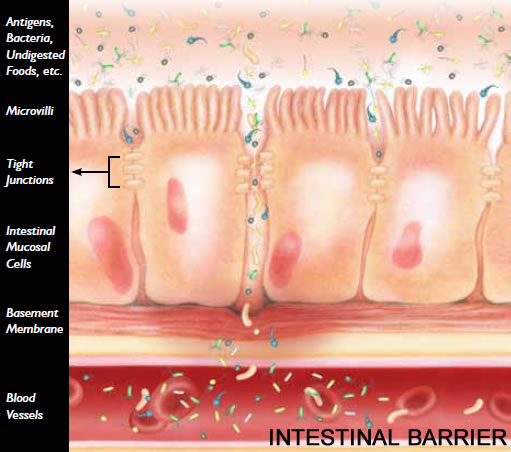
Leaky gut syndrome, or increased intestinal permeability, is a condition that occurs when the intestines become damaged, resulting in an enlargement of the pores in the intestinal wall. The increased pores size allows harmful toxins, bacteria and proteins to enter the body, thus overloading the liver and immune system (4).
How Leaky Gut occurs?
Many factors have been shown to increase intestinal permeability. These include food allergies, intestinal infections, aging, alcohol, non-steroidal anti-inflammatory drugs (eg. aspirin), intestinal dysbiosis, chemical toxins, maldigestion and the Pill (1,2,3, 4)
Disease associated with Leaky Gut (2)
- Chronic Arthritis
- Acne
- Eczema
- Psoriasis
- Irritable bowel syndrome (IBS)
- Multiple food and chemical sensitivities
How do you know if you have Leaky Gut?
A simple diagnostic urine test can be done at home. The person collects a urine sample prior to drinking a solution containing lactulose and mannitol (two non-metabolised sugar molecules). Further urine samples are collected throughout the next six hours. The samples are then sent to a private diagnostic laboratory. If there is a positive result, the practitioner will recommend a treatment programme designed to heal the gut. The test is done by a private laboratory and it does incur a cost. What I do in my clinic is assess the symptoms, test with NAET method for possible sensitivities to food and advice on how to repair the intestinal tract, so spend the money for the test on repairing the intestinal tract (I have enough experience on the subject to know what the symptoms would be, but there is still that choice of doing the test if you would like to).
Reference:
1) BjarnasonI. et al. (1987) The pathogenesis and consequence of non steroidal anti-inflammatory drug induced small intestinal inflammation in man. Scand. J. Rheumatol; Suppl. 64:55-62
2) Galland L. (1995) Leaky gut syndrome: breaking the vicious cycle. Townsend Letter for Doctors: August/September.
3) Jenkins AP. et al. (1991) Do non-steroidal anti-inflammatory drugs increase colonic permeability? Gut; 32 (1):66-9.
4) Pizzorno J. (1998) Total Wellness. Rocklin (CA): Prima Publishing.
 Craniosacral Healing /Nutrition NAET/Mindfulness living/ NlP health coach /mind body and soul